Why Batch-Cooked Protein Dries Out by Day Four (And the Fix)
Quick Answer: Batch-cooked protein dries out mainly from overcooking during the initial batch process (since it keeps cooking as it cools) and from reheating without added moisture. Undercooking very slightly, cooling quickly, and reheating with a splash of liquid fixes most of it.
Day one, your batch-cooked chicken is juicy and great. By day four, it’s noticeably drier — and it’s not just the container’s fault.

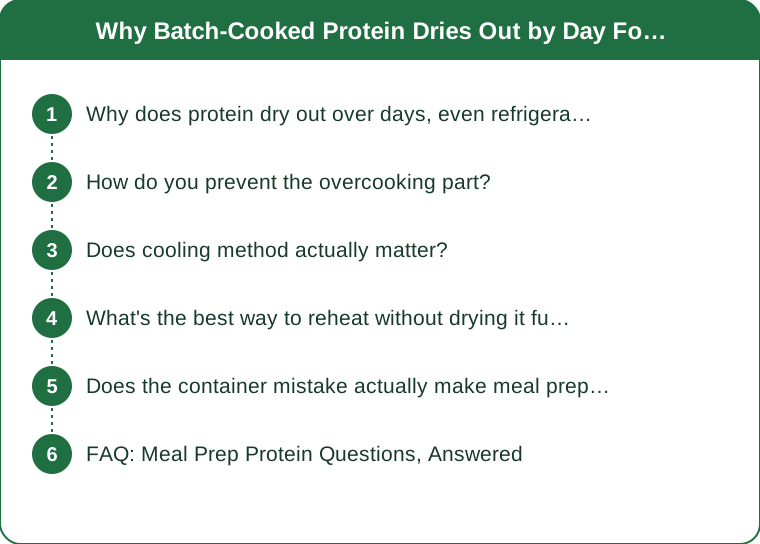
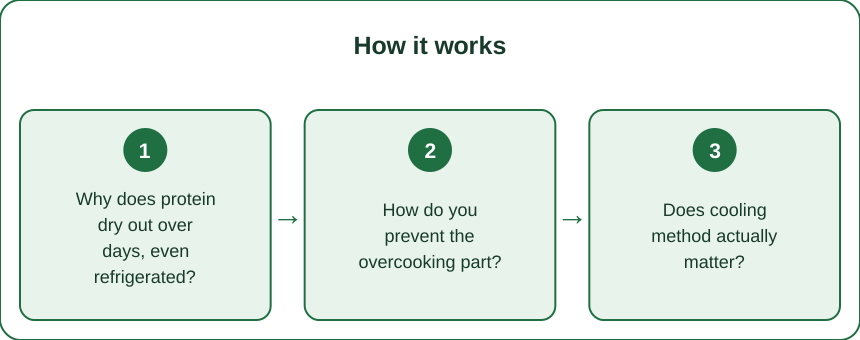
Why does protein dry out over days, even refrigerated?
Two separate things happen: carryover cooking during the initial cook (protein continues cooking from residual heat even after you remove it from heat, often pushing it past the ideal doneness), and moisture loss during storage, as proteins slowly release liquid into the container over several days.
Both effects compound — protein that started slightly overcooked has less moisture reserve to lose before it crosses into noticeably dry territory by day 3-4.
How do you prevent the overcooking part?
Pull protein off heat 5°F below your target internal temperature — for chicken breast, that means removing around 160°F rather than 165°F, since carryover cooking will finish the job during resting. A meat thermometer removes the guesswork here far more reliably than cook-time estimates.
Does cooling method actually matter?
Yes — cooling batch-cooked protein slowly (leaving it out, or packing it hot into a sealed container) traps steam, which both promotes bacterial growth risk and creates uneven moisture loss. Spread protein in a single layer on a sheet pan to cool for 15-20 minutes before portioning into containers, which cools it faster and more evenly.

What’s the best way to reheat without drying it further?
Add a splash of broth, water, or sauce (a tablespoon or two) before microwaving, and cover the container loosely to trap steam during reheating. Reheating on lower power for a longer time (50-70% power) also dries protein less than a quick blast on full power.
Does the container mistake actually make meal prep worse?
Yes, somewhat — tightly sealed airtight containers can trap condensation that makes some foods soggy, while very loosely covered containers let more moisture escape into the fridge air, drying protein faster. A container with a few small vents, or one that’s just snugly (not vacuum) sealed, tends to balance this best.
FAQ: Meal Prep Protein Questions, Answered
How many days is batch-cooked protein actually good for?
Most cooked protein is safe for 3-4 days refrigerated; freeze portions beyond that if you’re prepping more than 4 days at once.
Does marinating help prevent dryness later in the week?
Yes — a marinade with some oil and acid can help proteins retain more moisture through cooking and reheating compared to plain, unmarinated batches.
Is it better to slightly undercook meal-prepped protein?
Aiming for the low end of the safe temperature range (not undercooking below safe limits) accounts for carryover cooking and helps prevent the overcooked, dry result by day four.
TL;DR:
- Dryness comes from carryover overcooking plus gradual moisture loss over days, not just time in the fridge
- Pull protein 5°F below target temperature and let carryover finish the job
- Cool in a single layer for 15-20 minutes before sealing containers
- Reheat with added liquid, covered, at lower power for better moisture retention
Next batch, use a thermometer and pull it slightly earlier than you think — day four will taste like day one.
Keep Reading
This article is for general informational purposes only and is not medical advice. Always consult a qualified health professional for guidance specific to you.