Where You Put Meal Prep in the Fridge Changes How Long It Lasts
Quick Answer: A home fridge is not one temperature. The door can run 4 to 6°C warmer than the back of the bottom shelf, and bacterial growth roughly doubles for every 5°C increase in that range. Meal prep stored in the door or the top-front shelf can lose two days of usable life compared with identical food stored at the back of the lowest shelf. Cool food quickly, store it at the back and low, and keep a fridge thermometer where you can see it.
You did everything right. Cooked Sunday, portioned into good containers, labelled the lids.
By Wednesday the chicken smells faintly off and the rice has gone slimy at the edges.
Your neighbour does the same routine and eats hers on Friday. The difference is probably 30 centimetres of shelf.
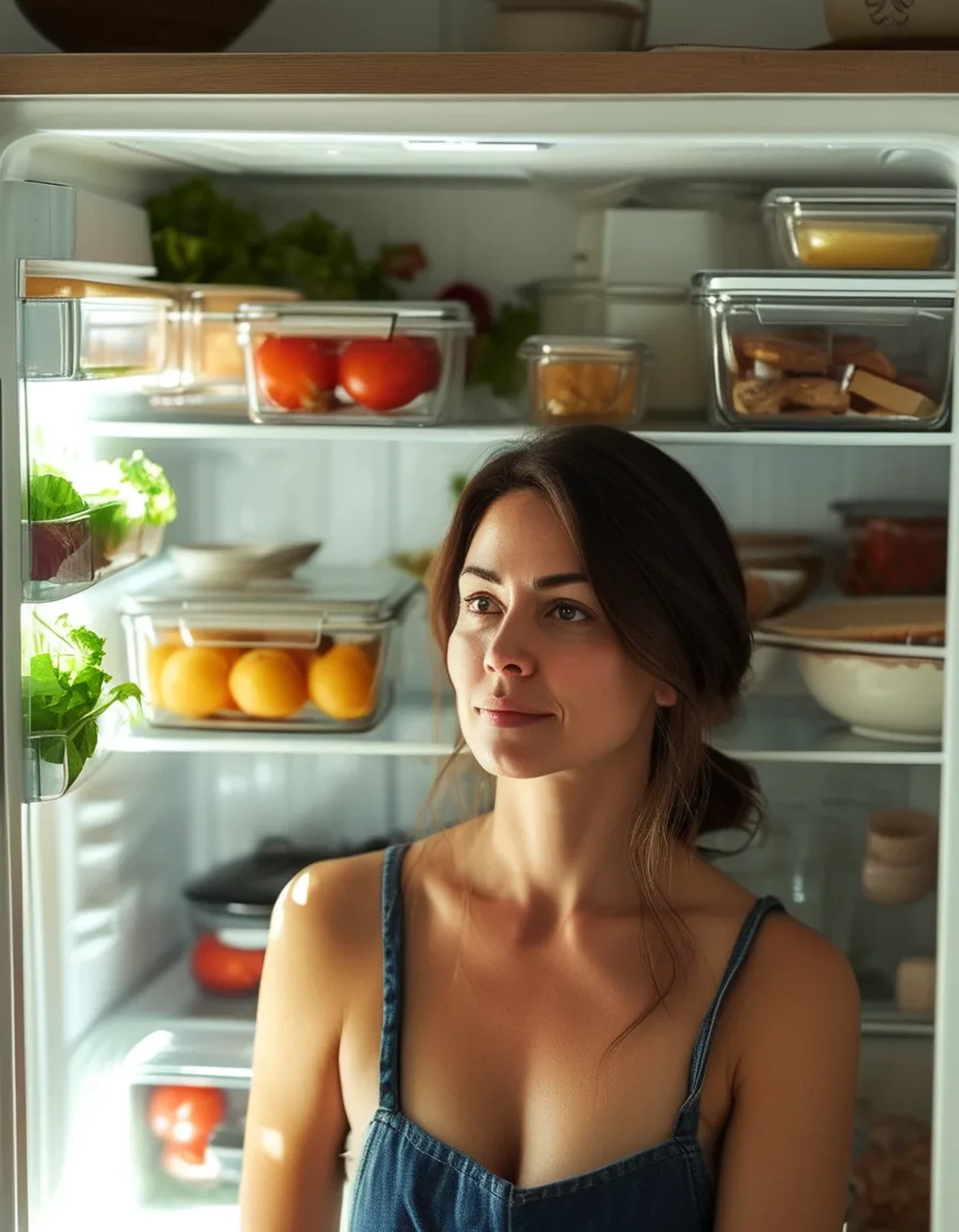
How different are the zones in one fridge?
More different than the single dial on the front suggests.
The door is the warmest place by a wide margin. It is exposed to room air every time you open it and has the least thermal mass. Measured door temperatures commonly sit 4 to 6°C above the coldest shelf. This is why milk in the door sours faster than milk on a shelf.
The top shelf runs warmer than the bottom in most designs. Cold air is denser and settles. In a standard top-mounted or fridge-freezer combination, the bottom rear is typically the coldest point outside the crisper.
The front of any shelf is warmer than the back. Every door opening pushes warm room air into the front third. Food stored at the front experiences far more temperature cycling.
Crisper drawers are humid, not necessarily cold. They are designed to hold moisture for produce. Cooked food in a crisper drawer often does worse, because high humidity favours surface bacterial growth on things that are not vegetables.
Growth rate is not linear with temperature. In the range between roughly 4°C and 10°C, many common spoilage and pathogenic organisms roughly double their growth rate for each 5°C rise. So a container at 8°C is not slightly worse than one at 3°C — it is meaningfully worse.
Your fridge dial is not a thermometer. Settings are relative, and actual temperatures drift with load, ambient heat and door habits. A five dollar fridge thermometer sitting on the middle shelf is one of the highest-return purchases in a meal-prep kitchen. This is general food-safety information, not medical advice.
How fast does food need to cool before it goes in?
Faster than most people manage, and this is where the majority of meal-prep spoilage actually originates.
The danger zone is roughly 5°C to 60°C. Food should spend as little cumulative time in that band as possible. Widely used guidance is to get cooked food from 60°C down to 20°C within about two hours, then from 20°C down to 5°C within a further four.
A sealed hot container cools terribly. A full, lidded container of hot chilli can take three or more hours to reach fridge temperature in the middle. The centre of that container spends the whole time in the ideal growth range.
Spread it out to cool, then consolidate. Portioning hot food into shallow containers with the lids off increases surface area dramatically. Two centimetres deep cools in a fraction of the time of eight centimetres deep.
Do not put a warm container next to your existing prep. It raises the temperature of everything near it. If you must chill something warm, give it its own space on the bottom shelf away from the rest.
An ice bath is the fastest home method. A shallow pan of food set in a sink of cold water with a little ice, stirred occasionally, reaches fridge temperature in 15 to 20 minutes.
Lid on only once it is cold. Warm food under a sealed lid creates condensation, and condensation on the surface of cooked grains and proteins is where the slime starts.
Rice deserves specific care. Cooked rice is a well-known case where slow cooling matters, because spores can survive cooking and germinate as it sits warm. Cool rice quickly, refrigerate promptly, and do not leave it at room temperature for hours.
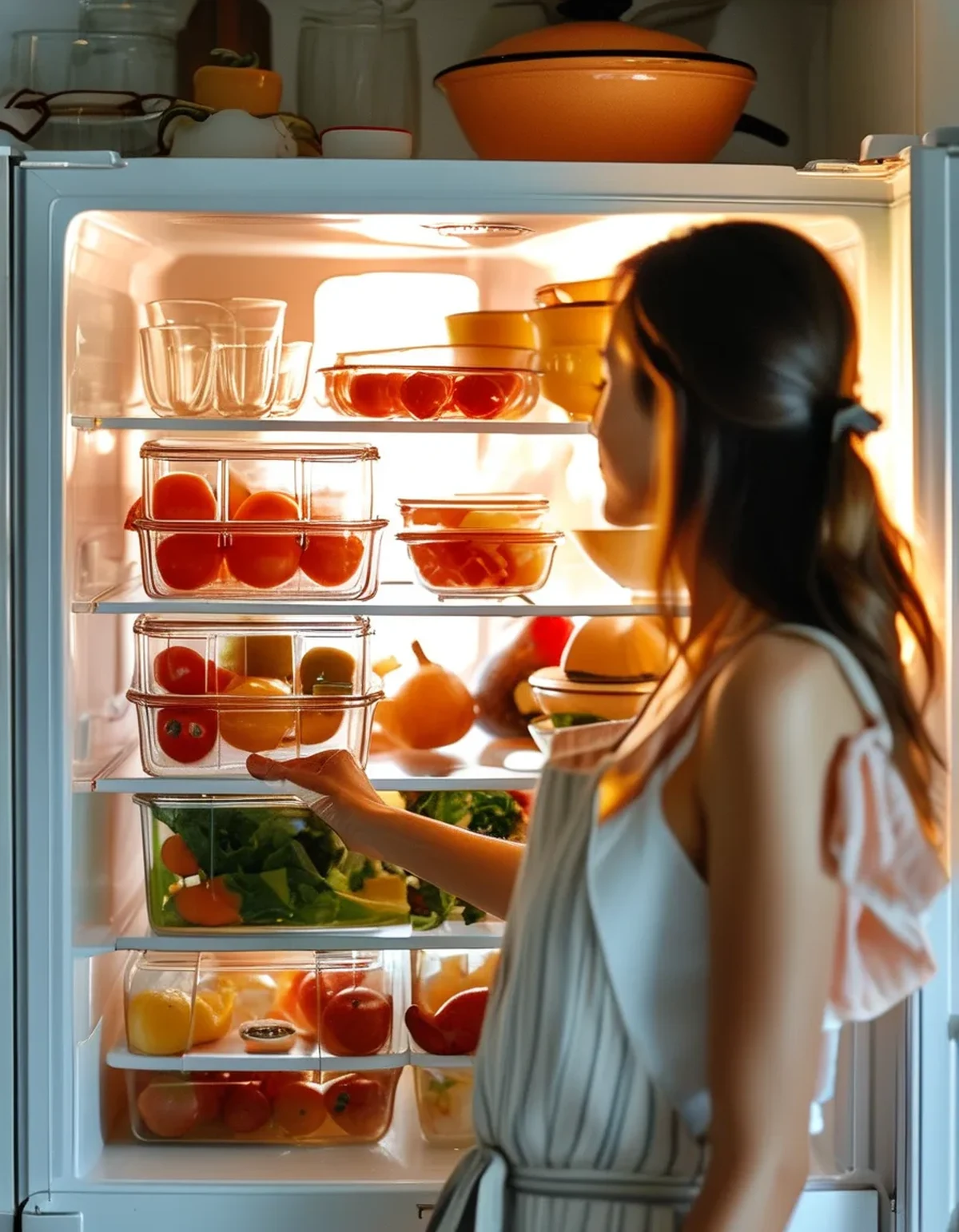
How should you actually arrange a week of prep?
By eat-by date and by zone, with the food that has to last the longest getting the best real estate.
Bottom shelf, back: the meals you will eat on days four and five. Coldest and most stable. This is prime storage and most people waste it on condiments.
Bottom shelf, front: days two and three. Still cold, more temperature cycling, but they are leaving sooner.
Middle shelf: day one, plus anything you will open and reseal. Convenient and warm enough to matter over a week but not over a day.
Door: only things that tolerate it. Condiments, hard cheeses, jars with high salt or acid. Never cooked protein, never dairy you care about, never prepped meals.
Raw meat, if any, always on the lowest shelf below cooked food. Drip contamination is the reason for this rule, and it overrides the temperature logic. If your lowest shelf holds raw meat, your prep goes on the shelf immediately above, at the back.
Leave gaps for air circulation. A tightly packed fridge has cold spots and warm spots. Aim for roughly 70 to 80 percent full — full enough for thermal mass, open enough for airflow.
Label with the cook date, not the eat-by date. Cook date is a fact; eat-by is an estimate you may want to revise.
Freeze days four and five on day zero. The single most reliable fix. Cook five, refrigerate three, freeze two, move one to the fridge on Tuesday night. The frozen portions taste better on Thursday than refrigerated ones do.
Seasonal note: kitchens run warmer in late summer, and a fridge in a warm kitchen works harder and cycles wider. Once the weather cools in autumn, the same fridge holds temperature more consistently — which is genuinely why summer prep spoils faster than winter prep in the same containers.
Myth vs Fact: Fridge Storage and Meal Prep
Myth: You should never put warm food in the fridge. Fact: The real rule is do not put a large, deep, sealed mass of hot food in. Portion it shallow and get it cooling. Leaving it out to reach room temperature is worse than chilling it promptly.
Myth: The fridge is one temperature throughout. Fact: Door versus back-bottom commonly differs by 4 to 6°C, which is enough to change spoilage timelines by days.
Myth: A colder setting is always better. Fact: Below about 1 to 2°C you start freezing produce and damaging texture. Around 3 to 4°C is the practical target for the main compartment.
Myth: If it smells fine, it is fine. Fact: Smell catches spoilage organisms. It does not reliably catch everything. Date labels exist because senses are incomplete.
Myth: Glass containers keep food fresher than plastic. Fact: Glass seals and cleans better and does not stain, which helps. The seal quality matters; the material itself is not preserving anything.
Myth: Reheating fixes food that has been stored badly. Fact: Reheating handles many organisms but not all toxins some of them produce. Storage is the control point, not reheating.
FAQ: Meal Prep Storage Questions, Answered
What temperature should my fridge be?
Around 3 to 4°C in the main compartment is the common target. Verify with a thermometer rather than trusting the dial.
How many days is meal prep good for?
Commonly cited guidance for cooked leftovers is three to four days refrigerated. Cool it fast and store it cold and you will reliably reach the top of that range; store it in the door and you may not reach the bottom.
Does the container material change shelf life?
Seal quality matters more than material. A well-sealing plastic container beats a poorly sealing glass one.
Should I freeze part of my prep?
Yes — it is the single most effective change. Freeze the back half of the week on cooking day and move portions down the night before.
Why does rice go bad faster than the protein?
Cooked rice held warm is a known risk, and it also picks up moisture and texture damage quickly. Cool it fast, store it cold, and it holds far better.
Is it safe to reheat prep more than once?
Best practice is to reheat only the portion you are eating, once. Repeated heating and cooling cycles the food through the danger zone each time.
TL;DR:
- A fridge has zones — the door runs 4 to 6°C warmer than the back of the bottom shelf.
- Growth roughly doubles for every 5°C in this range, so placement changes spoilage by days.
- Cool fast: shallow containers, lids off, ice bath if needed. Lid on only when cold.
- Store days four and five at the back of the bottom shelf; never store prepped meals in the door.
- Freeze the back half of the week on cooking day. It beats every other trick.
Buy a fridge thermometer. It will tell you more about your prep than any recipe will.
Keep Reading
This article is for general informational purposes only and is not medical advice. Always consult a qualified health professional for guidance specific to you.