The Two-Container System: Why Splitting Every Meal Fixes Soggy Prep
Quick Answer: Food gets soggy in the fridge because water moves from wet components to dry ones until everything reaches the same moisture level. Sealing rice, greens, and sauce in one container guarantees this. Splitting each meal into a wet container and a dry container — and combining them only at eating time — keeps texture intact for four to five days instead of two.
Monday’s lunch is great. Thursday’s is the same food, and somehow it is a different meal.
Nothing spoiled and you did not cook it wrong. The water simply moved.
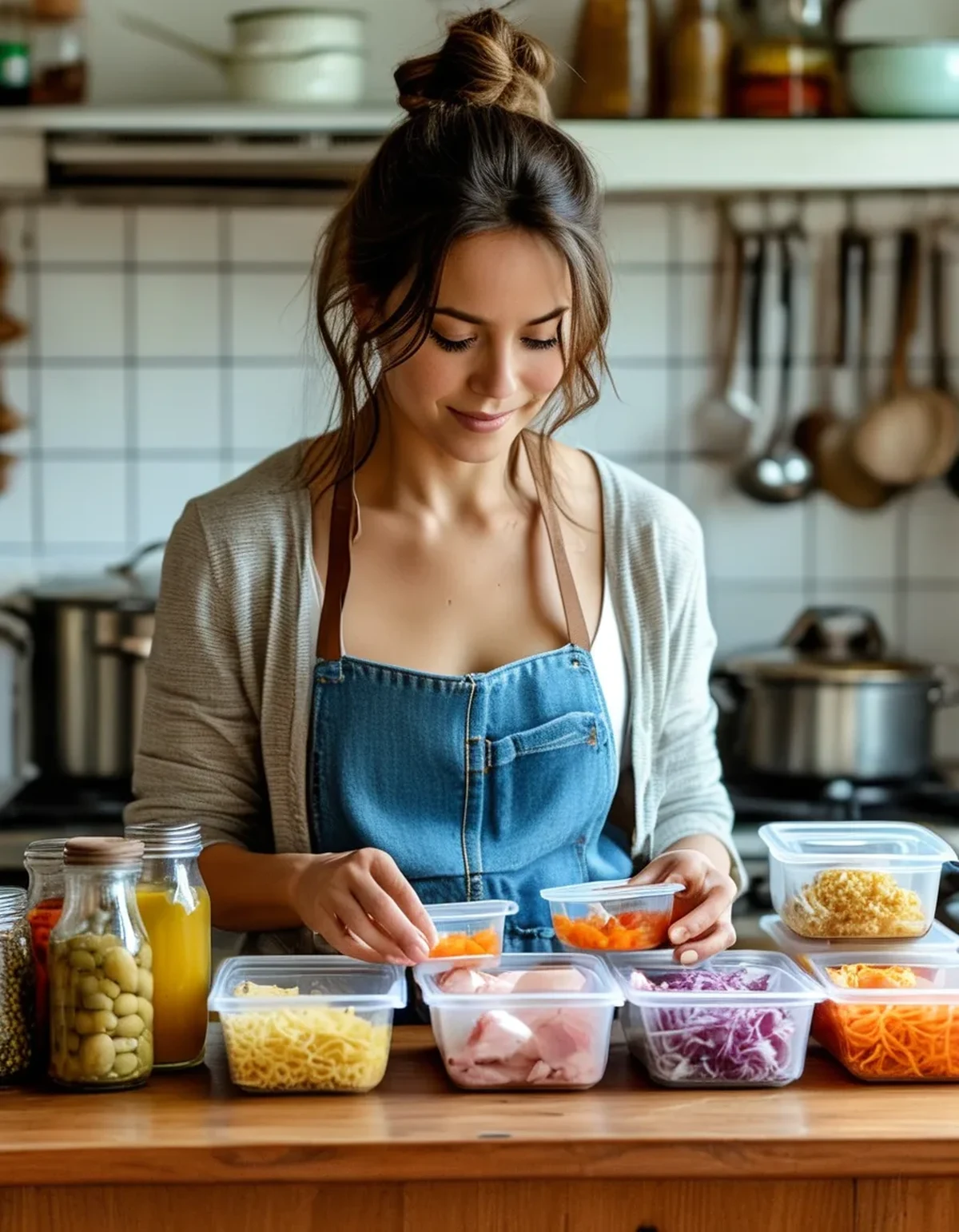
Why does meal prep go soggy by midweek?
Water moves toward dryness, and a sealed container is a closed system.
Moisture equalizes across everything touching. A dressed salad, a sauced grain bowl, or roasted vegetables next to rice will all reach the same water content within about 48 hours. The crisp component always loses.
Salt accelerates it dramatically. Salt and sugar pull water out of cell walls through osmosis. A salted or sauced component next to a dry one is not just sharing ambient moisture — it is actively drawing water out of the food and releasing it into the container.
Condensation adds more water than people realize. Food sealed while even slightly warm produces steam that condenses on the lid and drips back down. This is why the top layer of a prepped meal is often the wettest part.
Starches change independently. Cooked rice and pasta undergo retrogradation in the fridge — the starch molecules recrystallize and squeeze out water. So the rice is both getting firmer and making everything around it wetter, at the same time.
The result: by day three you have uniformly damp food that is safe, nutritionally fine, and unappealing enough that you order lunch instead.
What exactly goes in which container?
The split is by moisture behavior, not by food group.
Wet container: sauces, dressings, anything acidic, cooked tomatoes, braised proteins in their liquid, marinated vegetables, yogurt-based components.
Dry container: grains, roasted vegetables, raw greens, nuts and seeds, crackers, anything crisp, grilled or roasted proteins without sauce.
The judgment calls: roasted vegetables go dry if you want them to keep any edge, wet if you have already decided they are a stew component. Cooked proteins go dry unless they were braised. Cheese goes dry, always.
Size the wet container small. A 2 to 4 ounce container with a real seal is enough for most sauces and takes almost no fridge space. This is the whole cost of the system.
And keep the dry container only two-thirds full. Air circulation inside the container matters — a densely packed container traps condensation against the food, while a looser one lets it settle on the walls instead.
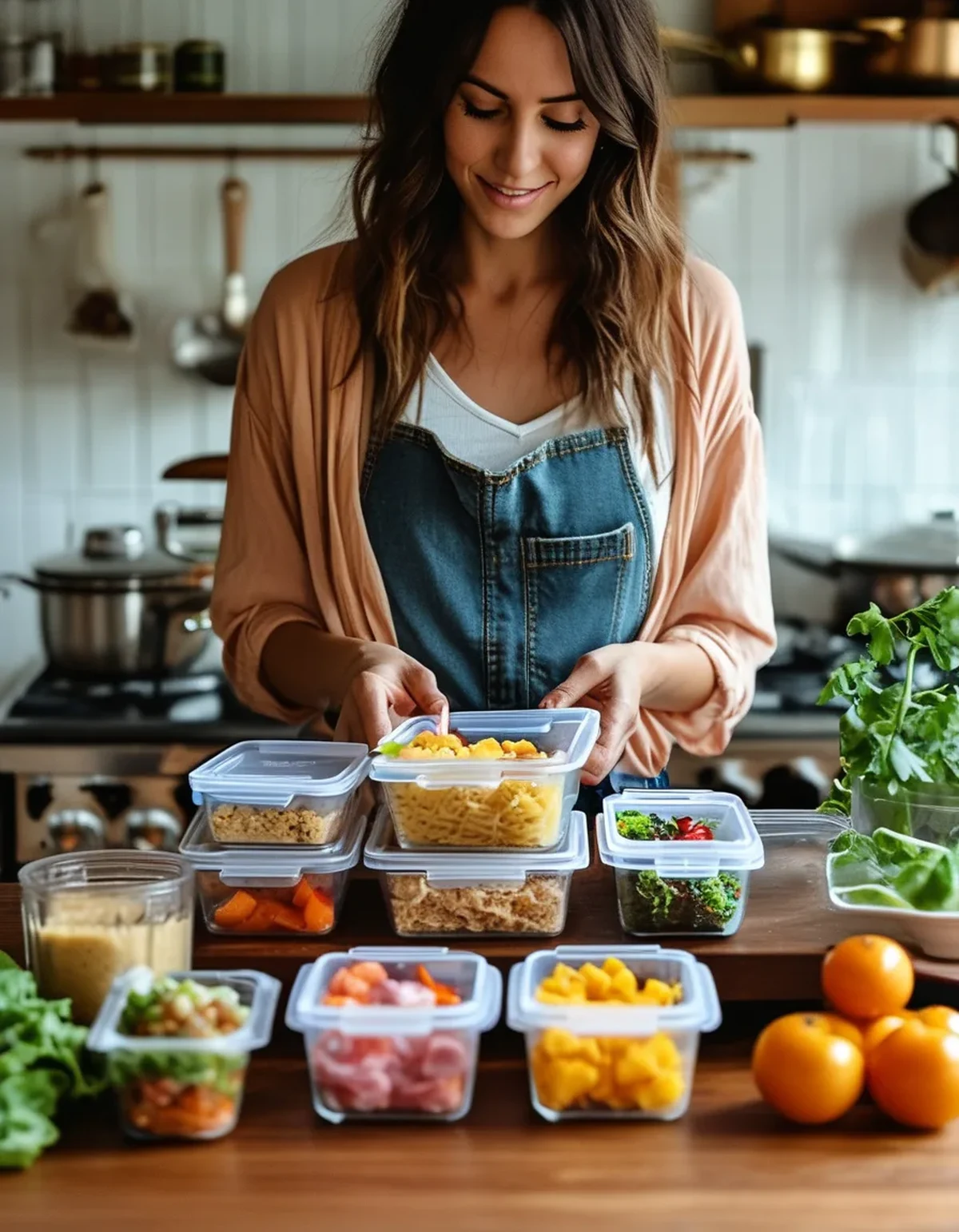
What Nobody Tells You About Cooling and Layering
The container split does most of the work, but three habits multiply it.
Cool completely before sealing — but on a rack, not the counter. Food cooling on a solid surface holds steam underneath and stays warm at the base long after the top feels done. A wire rack cuts cooling time by roughly half and prevents the trapped-steam layer entirely.
Layer heaviest and driest at the bottom. Gravity pulls whatever moisture does exist downward. Grains at the bottom get soggy; grains on top stay defined. Put dense proteins at the base, grains in the middle, delicate items on top.
Paper towel is not a hack, it is a tool. One folded sheet on top of greens or roasted vegetables absorbs the condensation that would otherwise drip back down. Change it on day three if the prep is running five days.
Portion into individual containers, not one large one. A big container gets opened five times, and each opening lets in warm humid air that condenses inside. Individual containers get opened once each.
And leave the crispy things out entirely. Nuts, seeds, croutons, fried shallots — store these in a jar in the pantry and add at the table. Nothing you do inside a fridge container keeps them crisp for five days, and everyone keeps trying.
Does this actually change what you cook?
A little, and mostly for the better.
Cook sauces separately and slightly thicker. A sauce made to be added at eating time can be more concentrated because it is not being diluted by four days of contact with a grain. This usually improves the flavor as a side effect.
Undercook vegetables you will reheat. Anything going into a microwave gets a second cooking. Pulling roasted vegetables at about 80% doneness means they finish correctly on Thursday rather than turning to mush.
Choose grains that hold up. Farro, barley, quinoa, and short-grain brown rice tolerate refrigeration far better than white jasmine rice or small pasta shapes, which go from firm to pasty quickly.
Prep two sauces rather than one. The main reason midweek prep gets boring is repetition of flavor, not texture. Two small containers of different sauces turns the same base into two meals for almost no extra effort.
Late-summer note: as tomatoes, corn, and peppers give way to squash and root vegetables in September, prep actually gets easier — the fall vegetables hold their texture in the fridge substantially better than high-water summer produce does. If your prep has been struggling all August, some of that resolves on its own.
FAQ: Meal Prep Texture Questions, Answered
How many days is prepped food actually good for?
For food safety, three to four days refrigerated is the standard guidance for most cooked dishes, with proteins at the shorter end. For texture, the split-container system extends the palatable window to about four to five days for grain-and-vegetable bowls. If you need a fifth and sixth day, freeze those portions on day one rather than pushing the fridge.
Do glass or plastic containers work better?
Glass seals more reliably and does not absorb odors or stain, which matters over years of use. Plastic is lighter and less likely to break in a bag. Neither materially changes the moisture problem — the seal quality matters far more than the material, and a cheap glass container with a warped lid performs worse than a good plastic one.
Can I dress a salad ahead if I use a sturdy green?
Kale and cabbage genuinely tolerate being dressed a day or two ahead, and often improve. Anything softer — spinach, lettuce, arugula, herbs — will be limp within hours. If you want a dressed-ahead salad in your rotation, build it on shredded cabbage or massaged kale and it will work all week.
TL;DR:
- Sogginess is moisture migration inside a sealed container, not a cooking error.
- Split every meal into a small wet container and a larger dry one; combine at eating time.
- Cool on a wire rack, layer dry and dense at the bottom, and keep crunchy items in the pantry entirely.
- Two sauces instead of one fixes the boredom problem that the container split does not touch. Buy a stack of small sauce containers and try it for one week. It is the cheapest change available and it is the one that makes Thursday’s lunch taste like Monday’s.
Keep Reading
This article is for general informational purposes only and is not medical advice. Always consult a qualified health professional for guidance specific to you.