How to Meal Prep for One Without Eating the Same Thing Four Days Straight
Quick Answer: Prep components, not meals. Cook one protein, one grain, two roasted vegetables, and two sauces on Sunday — about 90 minutes — and assemble different combinations all week: a bowl Monday, tacos Tuesday, a fried-rice remix Wednesday, a big salad Thursday. Repetition fatigue comes from repeating finished dishes, not ingredients, and sauces are what make the same chicken taste like four different dinners.
Every meal prep guide quietly assumes four servings disappear in one dinner. Cooking for one, that same math sentences you to the identical plate four times in a row, and by day three you are ordering out while a full fridge watches. The fix is not cooking less. It is stopping one step earlier.
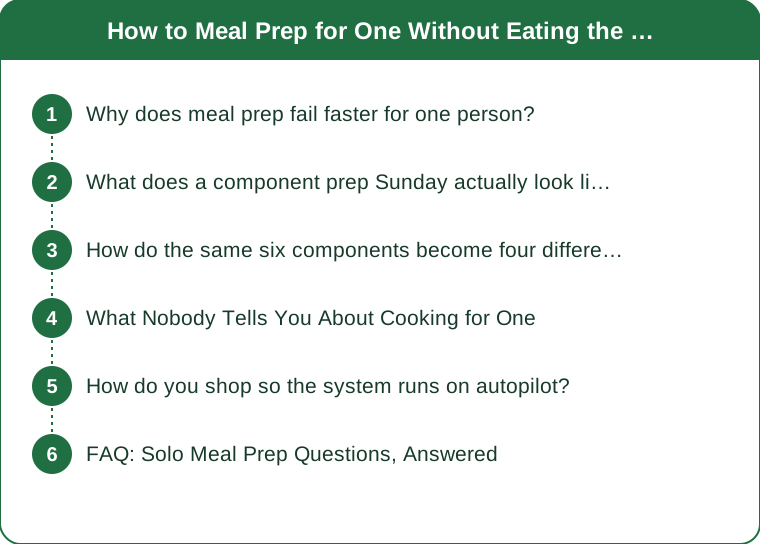
Why does meal prep fail faster for one person?
Because a batch outlives your interest in it.
A recipe that yields four servings feeds a family once. It feeds a single person four times, and flavor fatigue is real and fast — by the third identical meal, satisfaction drops measurably and the takeout app starts looking reasonable. This is a wiring feature, not weak willpower: novelty drives appetite, and a repeated dish loses appeal with each exposure.
Halving recipes seems like the answer and mostly is not. Half-batches cook worse in pans sized for full ones, the per-hour payoff of your Sunday shrinks, and two servings still means eating everything twice.
There is also a texture problem specific to finished dishes. A fully assembled meal reheats as a unit — the crisp things steam soft, the sauced things soak, and day-three casserole is a monolith. Components stored separately each keep their own texture and reheat on their own terms.
And finished-dish prep locks in your Sunday guess about what Thursday-you will want. Component prep defers that decision to the night itself, which is exactly when your appetite has an opinion.
What does a component prep Sunday actually look like?
Ninety minutes, one oven, two burners, six outputs.
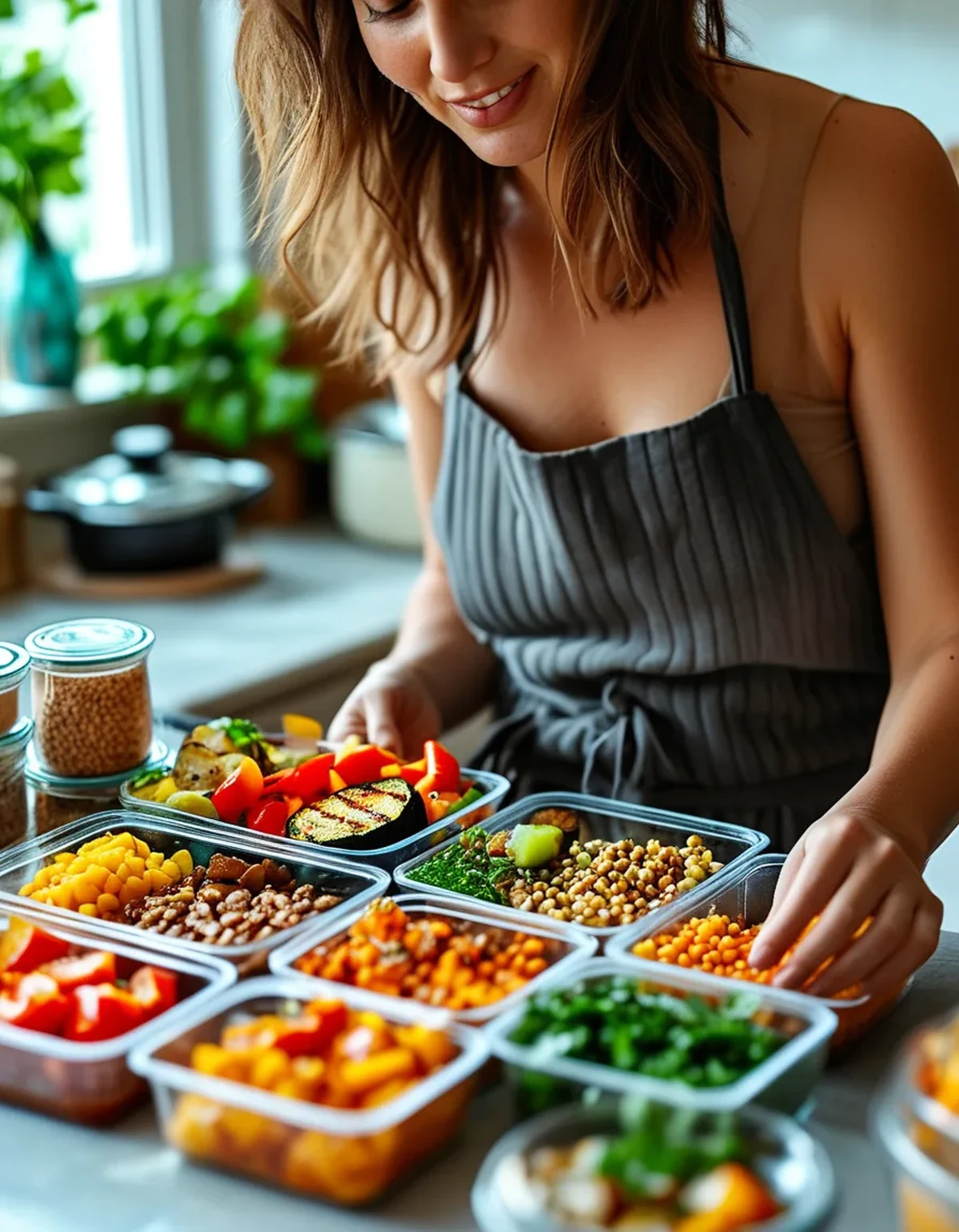
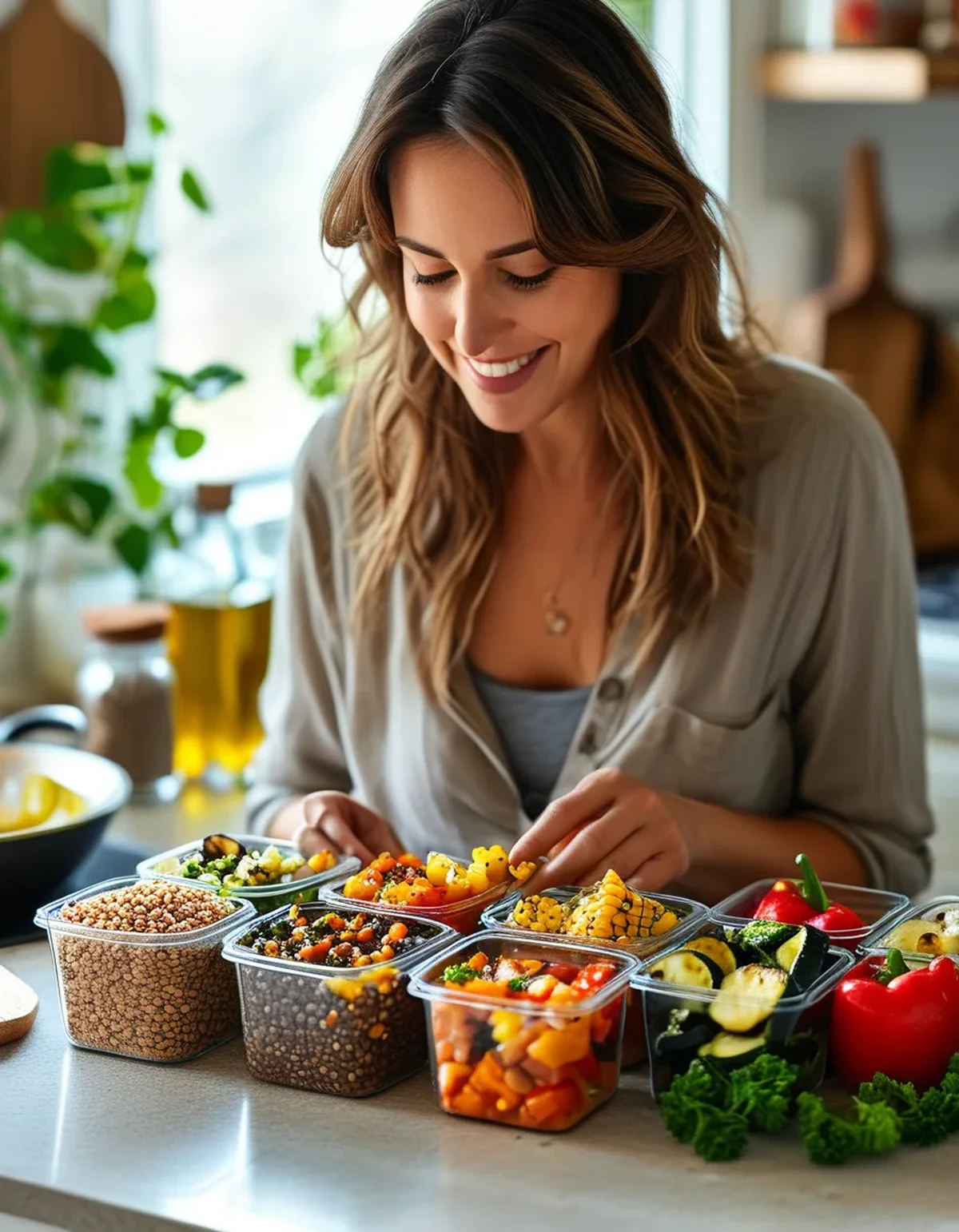
One protein, cooked plain. A tray of chicken thighs, a pound of browned ground turkey, a batch of baked tofu — seasoned only with salt, pepper, and oil. Plain is the point; identity comes later.
One grain, cooked in broth. Rice, quinoa, or farro, three to four cups cooked. Broth instead of water is the single cheapest flavor upgrade in prepping.
Two roasted vegetables, kept separate. Whatever is cheap and in season — right now that is peppers, zucchini, corn, and green beans. Two trays, different seasonings, stored apart so they can play different roles.
Two sauces. This is the engine. A ten-minute peanut sauce and a five-minute chimichurri, or a yogurt-tahini and a chipotle-lime crema. Sauces are where the week’s variety actually lives.
One raw crunch element. Shredded cabbage, quick-pickled onions, or cucumbers — something that never sees heat and wakes up every plate.
Sequence it so nothing waits: oven trays go in first, grain simmers while they roast, sauces blitz together while everything cools. Cool fully before lidding, and park it all on one fridge shelf so assembly is a reach, not a hunt.
How do the same six components become four different dinners?
By changing the format and the sauce, which is what your palate actually tracks.
Monday: grain bowl. Rice, chicken, both vegetables, peanut sauce, pickled onions. Five minutes, one bowl.
Tuesday: tacos. Warm tortillas from the freezer, the same chicken re-crisped in a hot pan for ninety seconds, cabbage, crema. The pan re-crisp is the move that makes prepped protein taste cooked-tonight.
Wednesday: fried rice. Day-three rice is better fried rice than fresh rice ever was. Hot pan, oil, rice, chopped vegetables, protein, an egg cracked in, soy sauce. Eight minutes and it eats like a different cuisine.
Thursday: big salad. Greens you bought fresh, everything else cold from the fridge, chimichurri as dressing. Cold roasted vegetables on salad are quietly excellent.
Notice what changed each night: temperature, vehicle, sauce, texture. Notice what never changed: the shopping list. Format is flavor’s delivery system, and rotating the format resets the novelty meter without recooking anything.
The freezer extends the trick across weeks — tortillas, half the protein batch frozen flat in a bag, a spare sauce in an ice cube tray. Week two starts with a head start instead of a blank fridge.
What Nobody Tells You About Cooking for One
The four-day ceiling is real. Cooked components hold three to four days at fridge temperature — protein and grains on the shorter end, sturdy roasted vegetables slightly longer. Prepping on Sunday for Friday is how single-person prep turns into food-safety roulette. Plan Sunday-to-Thursday, let Friday be the night out, and freeze anything that will not make it.
Smell and look are not reliable referees by day four; when the label date and your nose disagree, the calendar wins.
Here is the counterintuitive one: buy the smaller containers even though they seem wasteful. Six matching two-cup containers beat two large tubs, because a tub you open six times introduces warm air and a serving spoon six times. Portioning once, on Sunday, is both safer and the difference between assembling dinner and excavating it.
Single-serving prep also has a loneliness tax nobody names: part of why solo cooks abandon the habit is that cooking for one feels like overhead instead of care. Component prep helps there too — Sunday becomes a 90-minute session with a podcast, and weeknights become two-minute assemblies, which is the ratio at which feeding yourself starts feeling like a favor from past-you rather than a chore from present-you.
And if a component flops — the zucchini went army-green, the sauce split — throw that one out and keep the system. One bad tray is a lost ingredient, not a lost week. That resilience is the real argument against finished-dish prep, where one wrong seasoning ruins four dinners at once.
How do you shop so the system runs on autopilot?
Build a template, not a list.
The permanent skeleton: one protein, one grain, two roastable vegetables, one crunch vegetable, two sauce bases, plus eggs and tortillas as standing infrastructure. Every week you fill the same seven slots with different answers — chicken becomes salmon, rice becomes farro, peppers become squash as September arrives. The template means the store trip takes twenty minutes and the Sunday session never requires a recipe.
Late summer is the cheapest possible moment to run this system. Corn, peppers, tomatoes, and zucchini are at their price floor, and a ten-dollar produce haul covers both roasting trays with change. As the market shifts over the next six weeks, the same slots fill with broccoli, sweet potatoes, and cabbage without the system noticing.
Spend where singles get punished, save where they do not. Small-format fresh produce is fine, but proteins are cheapest in family packs — buy the big tray, cook half, freeze half raw. The freezer is how one person shops like a household without eating like a cafeteria.
Keep a running note of sauce ratios that worked. Two good sauces you can make from memory are worth more to this system than fifty saved recipes, because the sauce is the only component that has to carry personality.
FAQ: Solo Meal Prep Questions, Answered
How long does component prep actually take each week?
About 90 minutes of Sunday work including cleanup, then two to eight minutes per weeknight dinner depending on format. The fried-rice night is the longest; the bowl night barely counts as cooking.
Can I do this without a real kitchen — dorm or studio setup?
A scaled version, yes. Swap the oven trays for one sheet-pan session in a toaster oven or an air fryer run in batches, use microwave grain pouches, and lean harder on no-cook components: rotisserie chicken, canned beans, bagged slaw, jarred salsa as one of your two sauces.
Is component prep cheaper than just cooking each night?
It is cheaper than the realistic alternative, which for most solo cooks is two cooked nights and three takeout nights. Expect a weekly grocery cost around $35 to $50 for the template, versus a single delivery order costing $25 on its own. The savings come from takeout displaced, not groceries optimized.
What about breakfast and lunch — same system?
Same fridge, smaller ambitions. The grain plus an egg is breakfast; anything plus greens and a sauce is lunch. Resist prepping seven distinct meals a day into the plan — dinner components that moonlight at lunch keep the Sunday session at 90 minutes instead of three hours.
TL;DR:
- Prep six components — protein, grain, two roasted vegetables, two sauces — instead of four copies of one finished dish.
- Rotate formats through the week: bowl, tacos, fried rice, salad. Format and sauce changes reset flavor fatigue; the shopping list never changes.
- Respect the four-day ceiling: prep Sunday through Thursday, portion into single-serve containers once, freeze the overflow.
- Shop a seven-slot template and buy proteins family-sized for the freezer — that is how one person gets household prices without cafeteria menus.
Run the template once this Sunday. If Thursday-you eats a salad built in four minutes from Sunday’s work and does not resent a bite of it, the system is doing the thing no batch of chili ever managed.
Keep Reading
This article is for general informational purposes only and is not medical advice. Always consult a qualified health professional for guidance specific to you.