How Many Days Ahead Should You Actually Meal Prep?
Quick Answer: Most cooked meals stay safe and taste their best for 3-4 days in the refrigerator, so prepping for a full 7-day week usually means freezing the back-half portions rather than keeping everything fresh in the fridge the entire time.
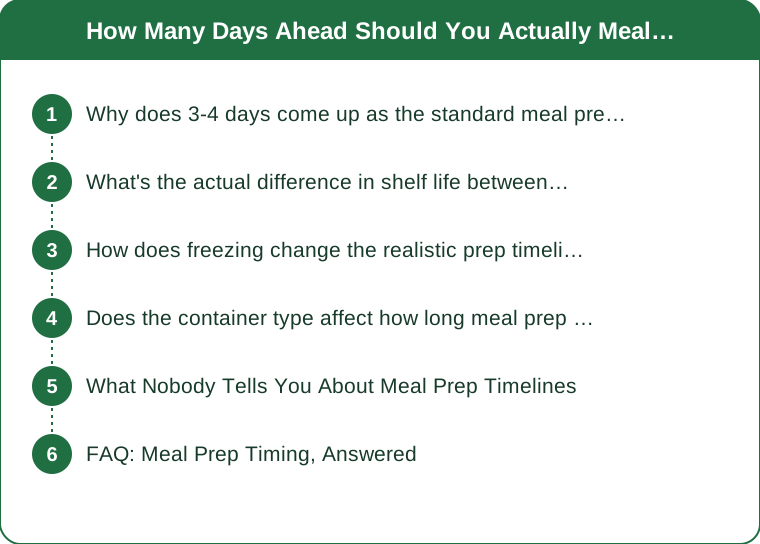
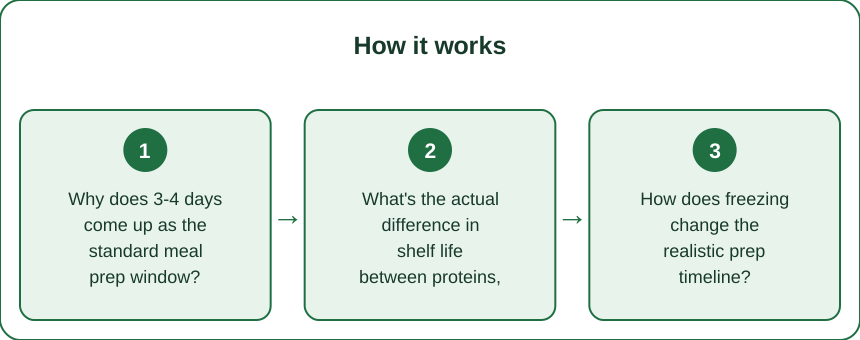
Why does 3-4 days come up as the standard meal prep window?
This is rooted in food safety guidance for cooked leftovers, not just personal preference — bacterial growth risk increases meaningfully after day 4-5 even when refrigerated properly at 40°F or below. Texture and flavor also decline noticeably by day 5 for most proteins and vegetables, independent of safety.
What’s the actual difference in shelf life between proteins, grains, and vegetables?
Cooked grains and roasted vegetables generally hold up the full 4-5 days without much quality loss, while cooked proteins — especially fish and ground meat — are better used within 3 days. Raw-adjacent components like fresh salad greens degrade fastest and are best added just before eating rather than prepped days ahead.
How does freezing change the realistic prep timeline?
Freezing extends most cooked meals to 2-3 months without significant quality loss, which is why a genuine 7-day prep strategy usually means cooking a batch, eating fresh for days 1-4, and freezing the remainder for days 5-7 rather than keeping a full week in the fridge continuously.
Does the container type affect how long meal prep actually stays good?
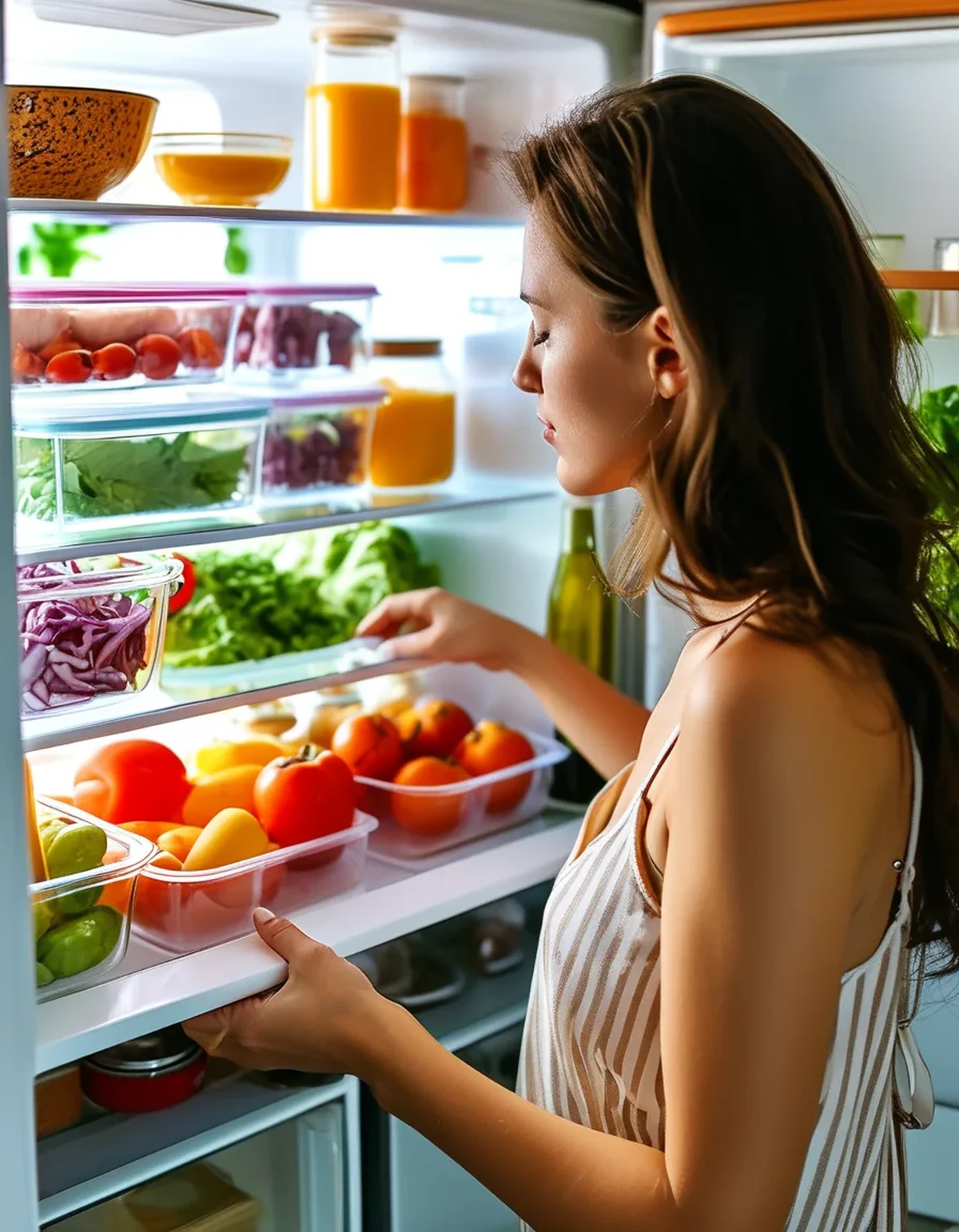
Yes, meaningfully — airtight glass or BPA-free plastic containers with a tight seal slow moisture loss and oxidation compared to loosely covered dishes. A poorly sealed container can shave a full day or more off a meal’s realistic quality window, even if food safety technically allows a few more days.
What Nobody Tells You About Meal Prep Timelines
Most meal prep content assumes one big cooking session covers an entire week, but the fridge-to-freezer split is what actually makes a full week work without the last two days tasting reheated and sad. Prepping isn’t really a single decision about ‘how many days’ — it’s a decision about which portions go where.
FAQ: Meal Prep Timing, Answered
Is it safe to eat meal-prepped food on day 5 if it still smells fine?
Smell isn’t a reliable safety indicator for bacterial growth, so it’s safer to freeze anything you won’t eat within 4 days rather than relying on smell or appearance alone.
Does reheating food fully kill any bacteria that developed during storage?
Reheating reduces some bacterial load but doesn’t eliminate toxins some bacteria produce, which is why proper storage time matters more than assuming reheating fixes any lapse.
How long can thawed, frozen meal prep sit in the fridge before eating?
Once thawed in the refrigerator, treat it like freshly cooked food and eat it within 3-4 days rather than refreezing or extending the original timeline.
TL;DR:
- Cooked meals are safest and taste best within 3-4 days refrigerated
- Grains and roasted vegetables hold up longer than proteins and fresh greens
- Freeze the back half of a week’s prep instead of relying on the fridge alone
- Airtight containers meaningfully extend real-world quality, not just safety
The question isn’t really how many days you can push it — it’s how to split a week’s prep between fridge and freezer so nothing tastes like a compromise by Friday.
Keep Reading
This article is for general informational purposes only and is not medical advice. Always consult a qualified health professional for guidance specific to you.